
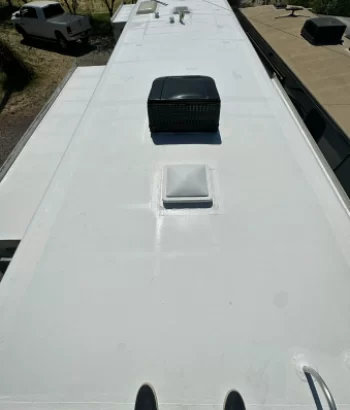
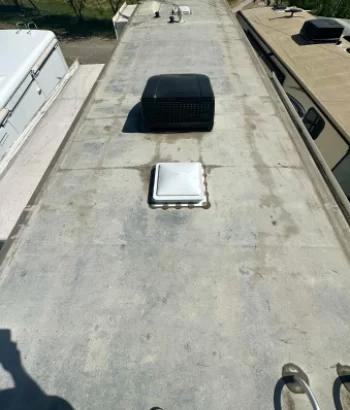
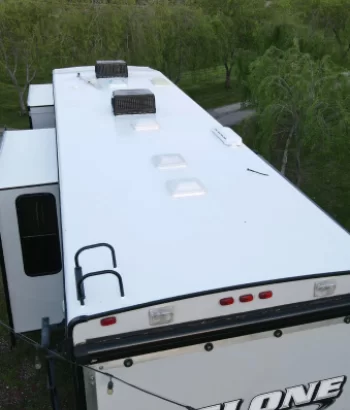
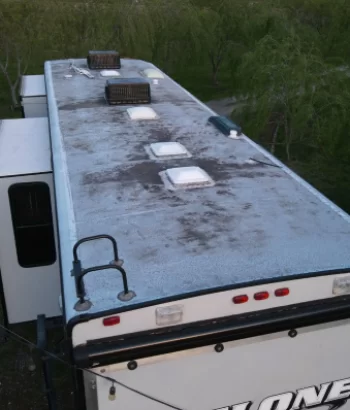
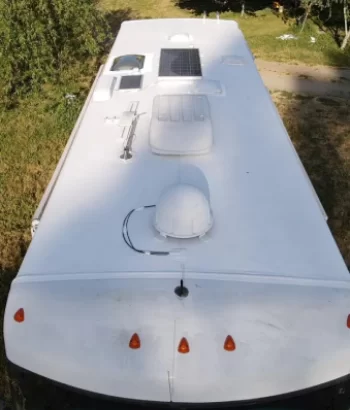
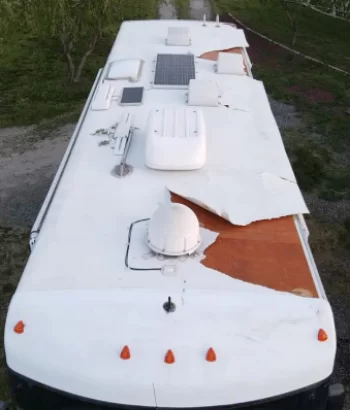
Rubber EPDM Roofing
EPDM stands for ethylene propylene diene monomer, a type of synthetic rubber material that is exceptionally resistant to weather conditions thanks to its unique molecular structure. Rubber EPDM is UV and ozone resistant, meaning you won’t see the same rapid aging that is present in other types of rubber with sun exposure. Surface scratches and scuffs are less likely to occur with EPDM roofing, but, if necessary, repairs are quick and easy thanks to the metal adhering properties. One disadvantage to consider with this type of roofing is that it absorbs heat more quickly than other types of roofing, even with lighter colored materials. Also, EPDM is susceptible to damage from solvents, hydrocarbons, and particular lubricants which it may come in contact with.
Rubber TPO Roofing
TPO stands for thermoplastic polyolefin and is another type of rubber commonly used for RV roofs. TPO roofs consist of a single-ply synthetic layer with reinforcing scrim around the seams, which must be installed via heat welding. Scrim is a heavy, coarse woven material that is used as lining. TPO resists weather and chemical erosion and does not promote mold or mildew growth. The material costs associated with rubber TPO roofs are less than those associated with other synthetic rubber roofing options. However, the technology is relatively new, so long-term cost-effectiveness is still up for discussion.
Fiberglass Roofing
Fiberglass roofing is made from synthetic materials and glass fibers, making it both flexible and durable. Rot, rust, and fire-resistant properties provide piece-of-mind regarding long-term durability. Aesthetically speaking, fiberglass roofs can be easily customized to match a certain color or molded into simple and complex shapes depending on your needs. Roof maintenance is essential with this type of roof as repairs are generally more expensive and may involve replacing entire sections rather than an easy spot repair due to the structure of the material. Luckily, the durability of this material reduces the likelihood that detrimental damage will occur. Fiberglass roofing is installed onto a base, typically plywood, using adhesive, so no welding is required.